Sue on Assignment: Altitude and AMD 11/18/2018

Sue had a request for a page about whether altitude affects AMD.  This is the first of 2 pages on the subject:

Altitude and AMD: Part 1 – there’s a link to page 2 at the bottom.

Sue has written pages on 13 topics so far including research on several supplements (bilberry, resvertrol, astaxanthin, CBD Oil), independence (what it means to Sue, how to get food to come to you), AREDS2 & geography atrophy, how to conduct an experiment on yourself, non-genetic causes of MD, research on calcified eye spots, money for assistive technology.  Check them out by going to…

Sue on Assignment: Special Topics

Do you have a topic you’d like Sue to research and write about? Let me know at light2sight5153@gmail.com.

Sue on Assignment: More Pages! 11/13/2018

Sorry it’s been so long since I posted. I have to admit that the Facebook group is keeping me busy!

Sue has written 11 pages on topics including research on several supplements (bilberry, resvertrol, astaxanthin, CBD Oil), independence (what it means to Sue, how to get food to come to you), AREDS2 & geography atrophy, how to conduct an experiment on yourself, non-genetic causes of MD, research on calcified eye spots, money for assistive technology.  Check them out by going to…

Sue on Assignment: Special Topics

Do you have a topic you’d like Sue to research and write about? Let me know at light2sight5153@gmail.com.

Me and My Cocoons 11/8/2018

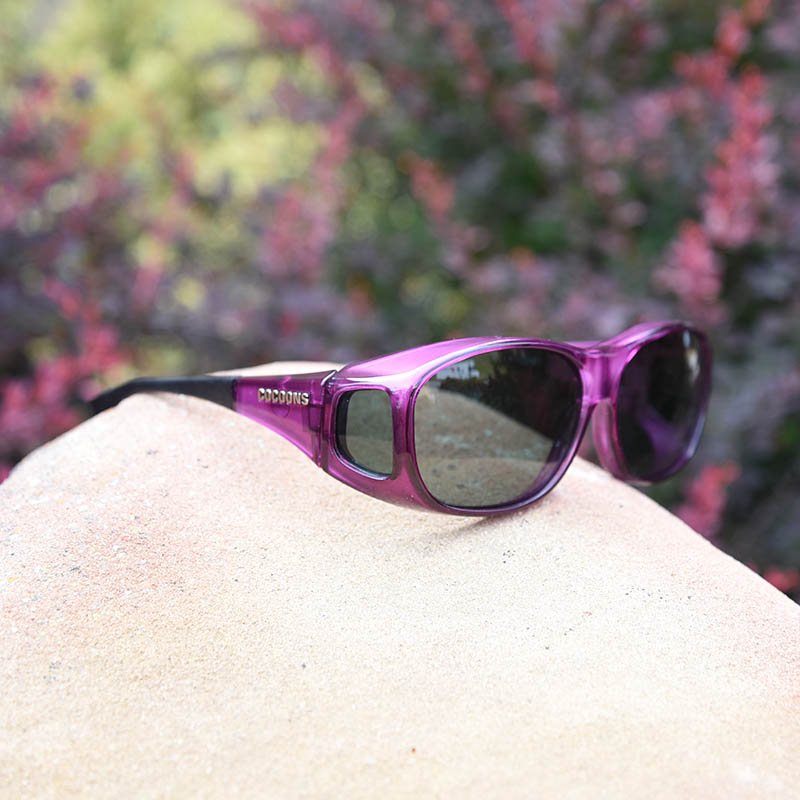
One of the risk factors for developing AMD and having it progress is exposure to the harmful rays of the sun.  Good sunglasses are a must! Years ago I found my first pair of Cocoon sunglasses which fit over my eyeglasses.  It was love at first sight (I know, that is really corny! ::grin::).  I have to admit, though, that I found their website to be a bit confusing, so I contacted the company and received a lot of help. After a few emails, I asked the great customer service person I’d been working with for something knowing that “Sorry, no” could have been the answer but the answer was “Sure!”  There’s an early Christmas present for everyone who reads BOTH of these pages…

Me and My Cocoons – A Personal Story, Not a Sales Pitch Page 1

Did you find that early Christmas present? If not, email me at light2sight5153@gmail.com.

Sue on Assignment: Independence – Getting Food to Come to You! 11/6/2018

We’re continuing with the topic of independence.  In our first post, Sue wrote about what independence looks like for her. In the Facebook group, we talked about one aspect: how it is possible to be independent without being able to drive by using the many sources of transportation that are out there that most people don’t know about. I recommend that those in the US check out the Ride in Sight website even if you don’t yet need it.  You enter your zip code and get a list of transportation options in your area. I was personally surprised to find 25 options not just for rides to medical appointments but for other reasons as well.

In one of Sue’s 2016 pages, she wrote about what it was like to not be able to drive while her husband was in the hospital.   One of the issues was how she was going to get groceries. You can read about that in Out of Milk and Eggs. I asked her to revisit that page and update us on the latest options for…

Sue on Assignment: Getting Food to Come to You

What Independence Looks Like When You Can’t Drive

In the Facebook group, I listed several scenarios and asked this question: “This is what independence means to me now and what I agree would mean independence in the future with visual impairment.”  Here are the top ones that were chosen:

  • Asking a friend, neighbor, family member for a ride when needed
  • Finding a transportation service and using it to go where I want and need to go (locally subsidized, Uber, Lyft, taxi, etc)
  • Accepting the offer for a ride made by someone who really wants to help; you’ve done the same for others in the past
  • Asking a friend, neighbor, family member for a ride when needed & bartering/exchanging services with them in exchange for transportation

Do YOU have a scenario to add to these?

Sue on Assignment: Independence

If you are a member of the Facebook group, you know that on Sunday I asked the question, “What is your number one concern about your future related to your diagnosis?”  By far the responses were about the fear of losing independence.   One of the most independent people I know is Sue.  Yes, Sue who has advanced dry AMD/geographic atrophy.  Sue who quit driving over 2 years ago when she realized it was not safe anymore.  Not being able to drive is – to many people – the end of independence.  If that is the case, how has Sue continued to live as full a life at 65 as she did before her vision declined?  I asked her…

Sue on Assignment: Independence

Spoiler Alert – why should you read Sue’s Journal Pages?

After less than a year of learning how to deal with her visual impairment both physically and emotionally, Sue has a ‘normal for her’ life: At age 65 and with advanced dry AMD/geographic atrophy, she works, attends regular exercise classes, rides her bike safely, travels, walks her dogs, kayaks, attends social events with her friends.   We are not suggesting that reading her journal will ensure you the same results, but we hope that Sue’s Journal of Her Journey will be educational and inspirational.

We’ve compiled the first part of a series of Sue’s Best Pages.  If you don’t think you are ready to tackle all 600+ of them, here’s our suggestion of where to start.

Sue’s Best Pages: Part 1

Highlight: “Beyond the tip of the iceberg – AMD and nutrition” 10/25/2018

I am sorry it’s been so long since I’ve sent out an email.  I’ve been a bit ‘under the weather’ (I’ll have to look up where that phrase came from). Sue’s been busy doing what Sue does which is just about everything! ::grin::


Disclaimer: Self-treating any eye condition and avoiding or delaying standard care may have serious consequences. Any of these recommendations are not intended to be a substitute for the medical advice given to you by your internist/general practitioner/primary care physician and your retinal specialist.

There’s always frustration when a patient with early AMD is told that they’re not candidates to take the AREDS/AREDS2 supplement.  “What do I do?” I get the same question if someone doesn’t have AMD but has a strong family history. What about those who are aging and are concerned about their risk? Those are the same questions asked of eye specialists who have patients in these categories.

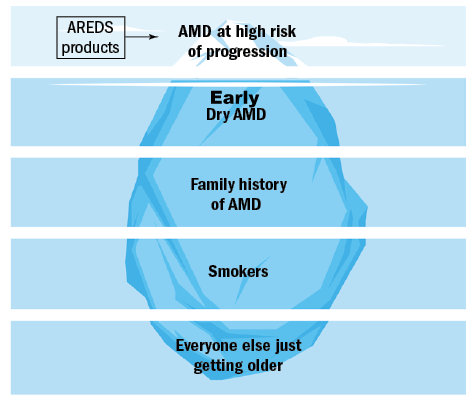
I found an article Beyond the tip of the iceberg – AMD and nutrition written by Dr. Rohit Narayan who is a therapeutic optometrist in England. His October 2018 article reviews some of the more recent studies about how nutrition affects the development and progression of AMD.  The AREDS and AREDS2 studies provided the most significant evidence that a specific formulation of vitamins and minerals can reduce the risk of advancing to wet AMD for those who have intermediate AMD or wet AMD in one eye but not the other one.  Dr. Narayan considers this group to be at the tip of the iceberg of those who are concerned.  He writes, “So, what advice can the busy clinician give to a patient regarding diet and its effect on eye health?”

I’ve taken the illustration of 5 layers of his iceberg and summarized his recommendations for 4 of them. The 5th one (bottom layer) will be coming when he publishes his recommendations in a future article.


Start here:  Article: Beyond the tip of the iceberg – AMD and nutrition – Part 1. At the bottom of each page, there’s a link to the next one.


Sue On Assignment: 2 Supplements 10/16/2018

I’m sorry that it’s been so long since I’ve posted.  Life has a way of interfering with plans as you know too well.

Sue’s been accepting more “assignments” and has written about 2 supplements that are talked about in relation to AMD.   As we both do when we are researching, we look for objective, scientific evidence of claims for AMD.  We may find many claims made by testimonials and anecdotes, but we don’t consider that to be evidence. I’ve included a great video below to help explain anecdotes and why we don’t include them in our reporting to you.

We stress that you should always talk to your medical doctor before you take ANY supplement ESPECIALLY if you are taking medications including other supplements and if you have other health issues.

Sue’s On Assignment Pages

Astaxanthin: Has Potential But Not Backed by Scientific Evidence or AMD

Bilberry: Safety & Efficacy of Supplement Form Not Supported by Research for AMD

More coming soon!
What’s An Anecdote and Why Is It Not Evidence

A lot of people believe that personal experience with a health product or intervention is good evidence that it works. Here’s why anecdotes don’t make for reliable evidence, and why the plural of “anecdote” is not “data”.

Sue’s Early Pages 10/11/2018

Title & date first published

27. Toy Story, Too March 26, 2016
Categories: Diagnosis: Newly Diagnosed, Eschenbach, Financial, Low Vision Aid, Technology: Phone/Tablet/Computer
Keywords: Financial, handheld magnifier, Low Vision Aid, Technology: Phone/Tablet/Computer

28. Taxman March 26, 2016
Categories: Diagnosis: Newly Diagnosed, Financial, Video
Keywords: deductions, disabled taxpayers, federal tax, free tax preparation, IRS, macular degeneration tax breaks, tax breaks for visually impaired

29. Yesterday March 27, 2016–>
Categories: Cognitive Therapy, Self-care, Sue’s Musings
Keywords: ACCEPTS, comparison, contributing, DBT, pity
30. Sue’s Terrible, Awful, No Good Day! March 27, 2016
Categories: Cognitive Therapy, Self-care, Sue’s Musings
Keywords: DBT, self-soothe

30. Sue’s Terrible, Awful, No Good Day! March 27, 2016
Categories: Cognitive Therapy, Self-care, Sue’s Musings
Keywords: DBT, self-soothe

Spoiler Alert – why should you read Sue’s Journal Pages?

After a year of learning how to deal with her visual impairment both physically and emotionally, Sue has a rather ‘normal for her’ life: At age 64 and with advanced AMD geographic atrophy, she works several jobs, attends regular exercise classes, rides her bike safely, travels, walks her dog, kayaks, attends social events with her friends.   We are not suggesting that reading her journal will ensure you the same results but we hope that Sue’s Journal of Her Journey will be educational and inspirational.

We’ve compiled the first part of a series of Sue’s Best Pages.  If you don’t think you are ready to tackle all 600+ of them, here’s our suggestion of where to start.

Sue’s Best Pages: Part 1
Sue on Assignment: Non-Genetic Causes of Macular Degeneration – 10/8/2018

We got a request from a Facebook group member for Sue to do research on this topic.  Sue found some “interesting” and unexpected information.

Sue on Assignment: Non-genetic Causes of Macular Degeneration – Page 1 (2 pages)

Have a topic for Sue?

Sue has offered to accept special assignments from us. If you have a topic, please post it in the comments or send it to me at light2sight5153@gmail.com. I can’t guarantee that she’ll take them all but we can try!


Sue on Assignment: How to Conduct an Experiment for Yourself 10/4/2018

It’s been 2-1/2 years since we started this project which includes the website and Facebook group. From the very beginning, Sue & I have stuck to our mission to educate & support members, but in the process to make sure the information shared is as accurate as possible and not misleading. Unfortunately, in the case of Facebook specifically, there’s lots of ‘bad’ information passed along quickly especially concerning products that offer ‘treatments.’ Not in our group, though. ::smile::

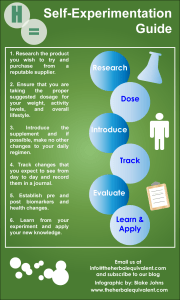
We know that we cannot stop people who want to try products that are not backed by scientific evidence to prove their SAFETY.  If you are going to experiment on yourself, we want you to do it in a rational & time-honored way: by scientific experimentation. It’s really not that difficult!

Sue on Assignment: How to Conduct an Experiment for Yourself


Go back to the list of “On Assignment” pages